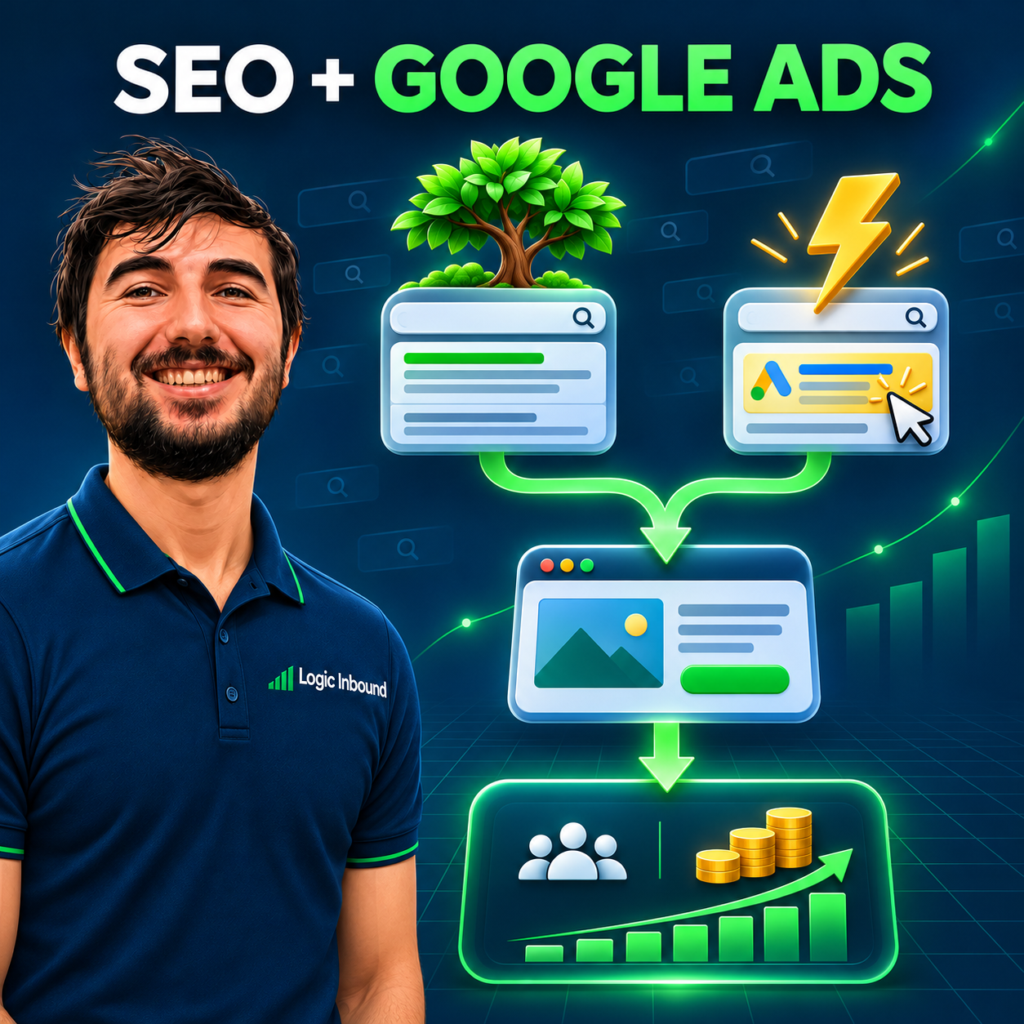
"Should we do SEO or Google Ads?" It is one of the most common marketing questions we hear, and it is usually the wrong question. It assumes the two channels are substitutes. They are not. Google Ads helps you capture demand now. SEO helps you earn demand over time. The strongest search strategies run SEO and Google Ads together, so each one makes the other cheaper and smarter.
This post explains how the two channels feed each other, what they share, and how to decide where to put budget at different stages of a business. If you want the side-by-side comparison of how each channel works, our post on SEO vs Google Ads covers that. This one is about running them as one system.
The short answer: use Google Ads for speed, testing, and coverage of high-intent searches; use SEO for durable visibility you do not pay for per click; share search-term and conversion data between them; and send both to landing pages that are built to convert and tracked to real outcomes.
The False Choice Between SEO and Google Ads
The "either/or" framing usually comes from budget pressure. Ads cost money every day. SEO takes months. It feels like you have to pick one.
But the two channels run on different timelines:
- Google Ads can put a new offer in front of high-intent buyers this week. Turn spend up, and visibility goes up. Turn it off, and visibility stops.
- SEO builds slowly. Google itself notes that some changes take effect in a few hours and others can take several months. Once a page ranks, it can keep bringing visitors without paying for each click.
Picking only one means accepting a weakness: ads alone stay expensive forever, and SEO alone leaves you invisible while it builds. Running both covers the gap.
Google Ads: Capture Intent Now
Google Ads earns its place in three ways:
- Launch speed. New service, new market, new offer: ads can be live in days.
- Offer testing. You can test headlines, offers, and landing pages quickly and learn what makes people act.
- Demand coverage. For the most valuable, highest-intent searches, ads let you appear at the top even where your organic rankings are not there yet.
The risk with ads is paying for clicks that never become customers. If that sounds familiar, see why Google Ads get clicks but no leads.
SEO: Build Compounding Visibility
SEO is the long game, and it compounds:
- Service pages that match what buyers search, one strong page per service and location.
- Technical health, so Google can crawl, index, and understand the site.
- Content that answers the questions buyers ask before they are ready to buy.
- Local visibility through a complete Google Business Profile and reviews.
- Authority from links and mentions on sites your buyers trust.
Each improvement keeps paying after the work is done. Over time, organic visibility can carry more of the load, and ad spend can focus on the searches where it earns the most.
How SEO and Google Ads Inform Each Other
This is where running both channels pays off. Each one produces data the other can use.
Paid search tells SEO what to build. The search terms report shows the exact phrases people typed before they clicked and converted. Terms that convert well in ads are strong candidates for new service pages and content. You learn in weeks what organic testing would take months to show.
Organic insight sharpens ads. The pages and questions that earn organic traffic show what prospects care about. That language belongs in ad copy and landing page headlines.
Google gives you a shared view. When you link Search Console to Google Ads, the paid and organic report shows how often your pages appear in organic results and which search terms triggered them, alongside your ads. That is the starting point for decisions like where organic is already strong and where ads should fill gaps.
The Shared Foundation Both Channels Need
SEO and Google Ads both fail without the same three things:
- A page that earns trust. Relevant headline, proof, and a clear offer. The best ad in the world cannot fix a weak landing page, and neither can a top ranking.
- A clear next step. One primary action per page: call, book, or request a quote.
- Tracking that reaches beyond the click. Calls, forms, and, ideally, the sales outcome, recorded by source. Without it, both channels report activity and neither reports revenue.
When your ads team and your SEO team report separately, optimize separately, and send traffic to different pages, you do not have a search strategy. You have two tactics competing for credit.
How to Split Budget Between SEO and Google Ads
There is no single right ratio. It depends on where the business is. A practical way to think about it:
| Situation | Lean toward | Why |
|---|---|---|
| New business, new service, or new market | Google Ads first, SEO started in parallel | You need leads now while organic builds |
| Established site with some rankings | Balanced mix | Ads cover gaps; SEO grows the base |
| Strong organic rankings for core services | SEO-weighted, ads targeted | Ads focus on high-value terms and new offers |
| Seasonal or emergency demand spikes | Ads flexed up and down | Paid spend can follow demand quickly |
Revisit the split every quarter based on cost per lead and, better, cost per closed customer by channel.
Mistakes That Make SEO and Google Ads Compete
When the two channels are run as separate programs, the same mistakes show up again and again:
- Different landing pages for the same search. Ads send traffic to one page, organic ranks another, and neither is improved with what the other learned. Pick the best page for each high-value search and send both channels there, or test deliberately.
- Turning ads off the moment rankings appear. A first-page ranking for one term does not mean you rank for the dozens of variations buyers type. Check the search terms and paid and organic data before cutting spend.
- Ignoring the search terms report. It is the cheapest keyword research you will ever get. If nobody on the SEO side reads it, half the value of running ads is lost.
- Reporting that gives both channels credit for the same lead. If each channel's report claims the same customer, total "results" look better than reality. Count leads once, by source, in one place.
- Bidding on everything. Ads work best on high-intent, high-value searches. Let SEO and content carry the early-research questions where a click rarely becomes a customer.
A Simple Monthly Review for Both Channels
One 45-minute review a month keeps the two channels working as one:
- Search terms. Which paid terms converted? Do we have a strong organic page for each?
- Paid and organic overlap. Where do we rank well organically and also pay heavily? Where do we have neither?
- Landing pages. Which pages convert best from each channel, and what can the weaker pages borrow?
- Outcomes. Leads, qualified leads, and closed customers by channel, counted once.
- Next month. One SEO priority and one ads test, chosen from what the data showed.
Build One System, Not Two Programs
The goal is one search strategy with two levers: speed and compounding growth. Ads bring leads and learning now. SEO turns that learning into durable visibility. Both send traffic to the same strong pages, and both are measured on the same outcome.
Want One Search Strategy Instead of Two?
Logic Inbound runs SEO and Google Ads management as one program, with shared data, shared landing pages, and reporting tied to leads and revenue. Book a call with Logic Inbound to map yours.
Should I do SEO or Google Ads first?
If you need leads quickly, start Google Ads while you begin SEO in parallel. Ads produce results in days and teach you which searches and offers convert. SEO takes longer to build, so starting it early means it is ready to carry more of the load later.
How do SEO and Google Ads work together?
Ads data shows which search terms and offers convert, which tells you what pages and content to build for SEO. Organic data shows what prospects care about, which improves ad copy and landing pages. Both channels share the same landing pages and conversion tracking.
Does running Google Ads help SEO rankings?
Paying for ads does not directly change organic rankings. The benefit is indirect: ads give you fast data on converting search terms and landing page performance, which you can use to build better pages for SEO.
What is the Google Ads paid and organic report?
It is a predefined Google Ads report that, once Search Console is linked, shows how often your site's pages appear in organic results and which search terms triggered them, alongside your paid ad data. It helps you see where organic is strong and where ads should fill the gaps.